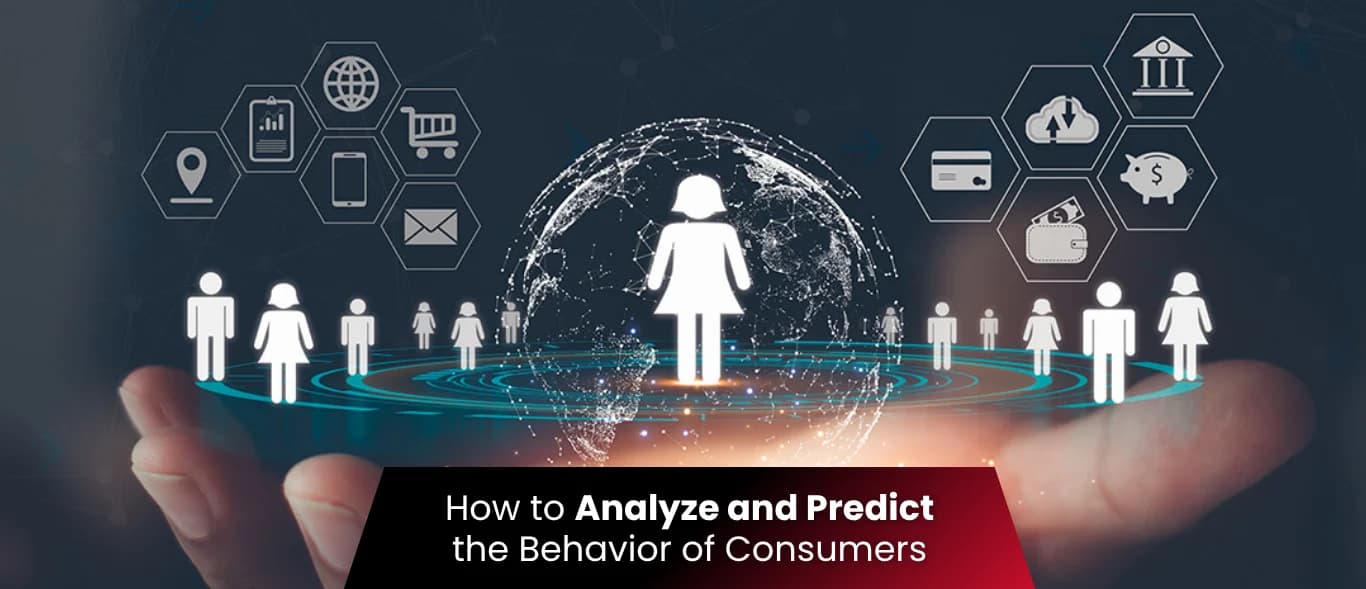
Customer behavior Analysis and purchase are not new concepts. Before the advent of the Internet, marketers studied customers' behavior to predict which products they would be interested in buying.
This was done through customer surveys, which were costly and time-consuming. With the power of data analytics, though, some businesses can now predict consumer behavior by analyzing past purchases, search history, or even social media profiles.
For example, if a person searches for animal-related items such as fish or birds, it may lead to the purchase of pet supplies.
The amount of data that can be analyzed is limitless, and businesses are taking advantage of this opportunity to identify consumer behavior and trends, creating a more effective behavioral analysis marketing strategy.
What is Consumer Behavior Analysis in Marketing?
Consumer behavior analysis is the process of studying how customers interact with products, brands, and services to predict future purchasing decisions.
The increased use of digital analytics is helping marketers develop a more detailed understanding of customers' behaviors.
Specifically, customer behavior analytics can help marketers create targeted ads and offers and better understand the customer journey.
The key to successful behavioral analysis marketing is identifying what your customers want and then providing it.
Customer behavior analytics is now used to predict it. There are many different types of behavioral analytics, but one of the most common is customer analytics.
This allows you to gather information on how your customers interact with your products or services. When you're gathering customer analytics, you can categorize your data by topic, such as customer behavior.
As digital analytics tools have grown in sophistication, we can also glean a more detailed understanding of customer behaviors. This information can then be used to inform marketing campaigns.
Predicting customer behavior is a valuable skill for any company. While some companies can use their own data analytics platforms to generate predictive insights, others may lack the resources to do so.
Importance of Consumer Behavior Analysis in Marketing
Understanding consumer behavior is necessary for various reasons:
Enhanced customer experience: By identifying customers’ preferences and needs, businesses can personalize their services to increase customer satisfaction.
Intelligent decision-making: With access to behavioral data, companies can make intelligent business decisions that meet their customers’ expectations.
Productive marketing efforts: Companies can analyze customer interactions to refine their marketing, resulting in improved engagement and higher conversion rates.
Speak to our data experts
Why Predicting Consumer Behavior Matters
Listed below are some examples that tell you why predicting consumer behavior is important in marketing:
1. Helps you support personalization across the buyer's journey
Having sufficient consumer data and a thorough understanding of your customers' buying decisions lets you customize their buyer journey.
A Tableau report states that 48% of consumers have stopped purchasing from organizations due to privacy issues.
A report from Accenture states that 41% of consumers only purchase from brands they trust and know.
A study shows that effective personalization leads to better consumer engagement, brand advocacy, and more frequent purchases.
A Statista report shows that 36% of US-based marketers have achieved a 20% ROI for each dollar invested in personalization.
2. Lessen friction points
You can use consumer behavior to identify the key friction points in customers’ journeys that lead to cart abandonment and lower conversion rates.
3. Increases sales per customer
Having a clear understanding of your consumers' behavior allows you to identify what your target market needs, develop tailored experiences, and help tackle their challenges.
Differences Between Customer Behavior Analysis and Consumer Analytics
| Aspect | Customer behavior analysis | Consumer analytics |
|---|---|---|
| Objective | Increase CX | Stay in touch with the emerging market trends |
| Key focus | Present customers | Active customers and new prospects |
| Major metrics | Response velocity, email engagement, and stakeholder involvement | Demographic segments, website traffic, and conversion rates |
| Use cases | User retention and UX optimization | Segmentation, audience targeting, and prediction |
| Final goal | Close particular deals quickly | Improve marketing investment and brand awareness |
With this, you will impress your customers, get them to spend more time browsing your products, and ultimately increase every customer’s average order size.
This is what Amazon follows, and it displays related products on its homepage and recommends similar products on product pages.
How Consumers Behave?
1. Consumers are more likely to buy a product if it is on sale
2. Consumers are more likely to buy a product if they have heard about it from someone they trust
3. They are also more likely to buy a product if they feel that it is necessary
4. They are less likely to buy a product if they have to pay more for it
5. They are also more likely to buy a product if they have seen a demonstration of it first
6. Post-purchase behavior: how a consumer feels about the product when they buy it
7. Pre-purchase behavior: how a consumer decides which product to buy
Key Types of Consumer Behavior
Purchase behavior: what a consumer is willing to buy.
a) Demand: the overall level of interest in a product, service, or brand
b) Retention: how long a consumer continues to use a given brand
c) Recall: how accurate consumers are when recalling their purchase experiences
Usage behavior: how the product is used.
Attrition: the percentage of consumers who leave a product or brand due to dissatisfaction, perceived lack of value, or other factors
Consumer loyalty: The extent to which consumers remain loyal to one brand over time.
1. Post-purchase behavior: how a consumer feels about the product when they buy it
2. Pre-purchase behavior: how a consumer decides which product to buy
How to Understand Consumer Buying Behavior?
Customer behavior analytics platforms are available in many different formats, including desktop applications, SaaS, and even as part of a marketing suite. As a result, it is vital to select the right platform for your business.
A customer behavior analytics platform that fits your needs and budget will be more valuable than an over-hyped solution that lacks the functionality you need.
Consumer Behavior Analytics
The ability to predict customer behavior is critical for success in the retail market.
Having a customer behavior analytics platform in place enables retailers to make more accurate predictions and better understand customer behavior. This is crucial for understanding what customers want and for designing and launching successful products.
Customer experience management: This encompasses the entire customer life cycle, from the moment a customer first experiences your brand to the point when they choose to leave your organization.
Common consumer behavior analysis techniques include:
• RFM analysis (Recency, Frequency, Monetary)
• Cohort analysis
• Customer journey analytics
• Predictive modeling
• Behavioral segmentation
What Customer Data Is Needed to Predict Consumer Behavior?
Let’s see the most precious data sources for consumer behavior analytics:
1st-party data
It supports privacy and is reliable. This data is gathered from your customers.
Major sources involve:
a) CRM data (customer profiles, interactions, support tickets)
b) Transaction data and buying history
c) Email engagement
d) App and website analytics (clicks, sessions, and navigation paths)
Behavioral data
It captures user interactions with your digital touchpoints.
Examples:
1) Dwell time and total page views
2) Cart additions, abandonment, etc.
3) Search queries
Why it matters:
This data lets you identify purchasing intent.
For instance, frequent visits to a product page usually indicate purchase readiness, whereas sudden drop-offs may signal friction in the journey.
Customer feedback and voice of the customer (VoC)
At times, the most useful insights come directly from customers.
Sources:
a) Surveys & Net Promoter Score responses
b) Product ratings or reviews
c) Social media comments
Social data
Mentions, sentiment analysis, shares, likes, and comments from social channels like Instagram, Facebook, X, and LinkedIn.
3rd-party and enriched data
External datasets such as competitor benchmarks, market research, and data enrichment providers.
Transactional data
This data captures the activities that directly generate revenue.
Major Components of Consumer Behavior Analytics
Consumer behavior analytics includes analyzing different factors that impact purchasing decisions:
Internal factors:
Social factors:- Reference groups, friends, and family can influence consumer choices.
Psychological factors:- These involve beliefs, attitudes, motivations, and perceptions that influence purchase decisions.
Personal factors: Personal characteristics, including lifestyle, income, gender, occupation, and age, remarkably impact consumer behavior.
External factors:
Cultural factors: Traditions, social norms, and cultural values considerably influence consumer choices.
Technological factors: Progress in technology improves consumer needs and preferences.
Economic factors: Conditions such as employment rates, inflation, and income levels greatly affect consumer behavior.
Start predicting it with smarter analytics tools
Major Metrics in Consumer Behavior Data Analysis
Customer lifetime value (CLV)
Customer lifetime value measures the total profit a customer produces over their connection with your organization.
It is used to focus on acquisition platforms, develop loyalty programs, and determine how much to spend on service recovery.
A CLV model built on AOV, gross margin, and purchase frequency can help you allocate your budget more effectively.
Churn analysis and cart abandonment rates
According to Baymard, 26% of visitors abandon their carts due to difficult checkout processes.
Cart and checkout abandonment indicates friction in the final step, whereas churn shows long-lasting value.
Inspect the steps where users drop off the most, then examine improvements such as guest checkout, clearer error states, transparency in shipping, and wallet payments.
For subscriptions, track cancellation reasons and renewal cohorts.
Session tracking, Clickstreams, and heatmaps
Session replays and heatmaps show usability improvements. Clickstream pathing notifies repeated journeys and deadlines.
Merge both quantitative and qualitative views to identify what to inspect first.
Bounce rate
This metric measures the percentage of website visitors who exit after viewing only one page. An increase in bounce rate indicates inappropriate content, slow load times, and a poor user experience.
Time on engagement and page metrics
Having a clear idea of how long a user stays on a blog or product page can disclose whether the data is relevant to their requirements.
Conversion rate
This metric measures the share of customers who take the preferred action, such as downloading an app, making a purchase, and subscribing to a newsletter.
How Can Businesses Analyze and Predict Consumer Behavior?
One of the main techniques is the Behavior Analysis and Modeling (BAM) approach.
This dynamic, data-driven modeling technique combines the best of traditional customer segmentation and behavioral analysis to identify how customers behave as they move through the purchase decision process.
The BAM technique identifies each customer's purchase cycle stage and the most profitable marketing approaches to apply to each stage.
It also allows marketers to identify their customers' behaviors at each stage of the purchase cycle.
BAM is a hybrid technique that combines the benefits of traditional behavioral segmentation and CRM.
The BAM approach uses four stages to identify and analyze behavior patterns, which are then used to create marketing strategies. It begins by developing a "pragmatic, respectful, and trusting working relationship with the client" through critical reflection.
The first stage is most commonly overlooked in terms of its importance. The practitioner is motivated to recognize the client's problem, not just the manifestations.
In the second stage, the practitioner identifies the behavior patterns resulting from the client's problem.
Here, the practitioner is not diagnosing the client's problem; instead, they are observing the client's behavior in response to their life situation.
In the third stage, the practitioner identifies the relationship between the client's problem and their behavior. This is the most critical and complex step in BAM.
It is important to note that this stage does not diagnose the client's problem but rather highlights the relationship between the client's situation and their behavior.
The practitioner identifies the client's problem and shows how the client's behavior creates, maintains, or worsens the situation.
In the fourth stage, the practitioner provides suggestions to alter the client's behavior and bring about positive change.
Also, BAM differs from other CRM techniques in that it does not use a database to market to customers.
What Predictive Analytics Techniques Are Used to Analyze Consumer Behavior?
Cohort analysis
Cohort analysis groups customers by when they started using your product, enabling comparisons between groups, such as first-time buyers in January and February.
This lets you study when your customer experience is increasing gradually. When you see that newer cohorts are staying longer than previous ones or spending more, it signals that your business ideas are delivering outcomes.
Cohort analysis is specifically effective for customer retention-focused companies or subscription organizations.
Funnel analysis
Funnel analysis tracks how customers progress through multiple engagement cycles with your company.
For example, in the eCommerce sector, you can monitor the number of visitors who navigate after browsing a specific product, to placing it in the cart, beginning checkout, and making a purchase decision.
If you notice significant decreases between cycles, you know where to put more effort to improve.
Predictive analytics
Predictive analysis lets you go deeper by using historical interactions to predict future actions.
For instance, you might study historical purchase patterns to indicate symptoms that a customer is planning to churn.
A customer who normally shops weekly and hasn't bought anything in the last 3-4 weeks could be a sign of churn.
Identifying these patterns lets you take the necessary steps to stop customer churn and prevent revenue loss.
Customer journey tracking
Customer journey tracking integrates qualitative and quantitative data to examine the customer experience as a whole.
You have to go through your customers' emotional journey, their challenges, and their moments of happiness. This extensive approach might show that, while your customers love your service or product, they are disappointed with your customer service processes, indicating a crucial region for improvement.
Customer journey mapping allows you to pinpoint opportunities to go beyond customer expectations at every stage of the interaction.
RFM Analysis
RFM analysis inspects three vital metrics of customer behavior:
1. Customer’s purchase recency
2. How frequently does a customer purchase within a specific time?
3. Their purchasing spend
This technique is specifically useful for retail companies planning to segment their audiences perfectly.
For example, a customer with strong frequency and monetary value but recency might be disengaging and needs instant attention.
RFM model lets you focus your marketing strategies and customize them to various customer segments.
Attribution analysis
Attribution analysis helps you identify the marketing touchpoints that yield better conversions. Here, you have to analyze all marketing touchpoints that generate more sales.
This analysis may indicate that although customers rarely purchase through social media ads, exposure to them increases the likelihood of a purchase after receiving an email promotion.
How Do Propensity Models Predict Customer Behavior?
Propensity modeling uses predictive analytics to estimate the likelihood that a customer will take a particular action, such as clicking an email link, reacting to a marketing campaign, or making a purchase.
It allocates a propensity score, a value between 0 and 1, to each customer, indicating their likelihood of engaging with an offer or campaign.
ML algorithms, such as decision trees, Gradient boosting, and logistic regression, analyze customer data, including campaign responses, email interactions, browsing activity, and demographics, to forecast future actions.
Look-alike modeling
This predictive analytics technique enables companies to identify new customers who closely resemble their existing high-value customers.
A look-alike model uses clustering algorithms, such as Logistic Regression or K-Means, to categorize customers by common behaviors, purchase patterns, or demographics.
Look-alike modeling is useful in:
a) Prospecting
b) Customer acquisition
c) Paid media campaigns
Consumer Behavioral Segmentation
Behavioral segmentation is an effective and efficient way to use your customer behavior analytics platform to predict customer actions.
It's possible to identify consumer segments of interest, such as frequent purchasers or heavy shoppers, and tailor marketing messages to them.
Segmentation can also be used to create custom offers tailored to customer interests.
For example, if you know that a segment of customers is interested in travel, you can offer special discounts and deals to those customers.
How to Conduct A Customer Behavior Analysis?
Conducting a powerful customer behavior analysis demands a methodical approach.
Step 1: Clarify goals or objectives
Examples of goals include increasing market share, improving sales, and increasing customer satisfaction.
Clear objectives help guide your analysis effectively.
Step 2: Understand your customer base and segment it perfectly
Customer segmentation categorizes customers by familiar characteristics, such as geographic location, demographics, or behavior.
Step 3: Gather and examine customer behavior data
After segmenting your customers, it’s time to collect and inspect suitable data. This might involve non-traditional, internal, and external data.
Step 4: Apply changes and track outcomes
Use the insights obtained and make changes in strategy. Then, track these changes clearly to understand their effect and modify your approach if required.
How Can AI Predict Customer Buying Behavior?
Machine learning has become one of the most widely used tools in customer behavior analytics.
It’s a subset of AI that informs computers (machines) to learn, understand, and make data-backed decisions.
But how is it applicable to customer behavior analytics, and what is its relation to predictive analytics?
First, it’s crucial to know that customer behavior data can be highly dynamic, complex, and massive.
Manually processing, inspecting, and deriving valuable insights from such complex data is impossible.
ML algorithms can rapidly and accurately inspect large amounts of data. They can point out hidden correlations and trends that a human might neglect.
For example, a machine learning algorithm might disclose that specific customers who purchase product “A” are likely to purchase product “B”.
Businesses use these insights to understand their customers' buying habits, preferences, and needs. For instance, a store can suggest product “B” to almost all customers who purchased product “A” in specific cities.
Real-World Examples of Behavior Prediction
The following are real-world examples of behavior prediction across industries:
eCommerce: Predicting purchase intent
Online retailers inspect browsing habits, cart activity, and previous purchases to gauge shoppers’ likelihood of making a purchase.
How it works:
a) Monitors repeat visits, product views, and time spent
b) Uses models for allocating a “purchase probability score.”
c) Triggers customized reminders or offers
Real-world impact:
2. Targeted discounts for high-intent users
Streaming platforms: Predicting content preferences
Streaming services use customer behavior prediction to understand what users like to watch next.
How it works:
1. Predicts genre and content preferences
2. Consistently filters recommendations
3. Inspects ratings, watch time, and viewing history
Real-world impact:
1. Auto-play suggestions
2. “Because you have watched…” recommendations
3. Personalized home screens
Retail: Predicting in-store behavior
Today, retailers are combining online and offline data to predict in-store activities.
How it works:
a) Forecast product demand and foot traffic
b) Uses purchase history, location signals, and loyalty data
Real-world impact:
a) Demand forecasting
b) In-store offers that are customized
c) Improved store layouts
Find out what your customers will do next
How to Analyze Social Media Trends to Predict Customer Behavior and Market Opportunities?
Consumers continuously express frustrations, opinions, happiness, and needs on social platforms such as X, LinkedIn, Reddit, Facebook, Instagram, and TikTok. By monitoring these expressions, companies can:
1. Understand sentiment and purchase intent
2. Improve marketing and product development campaigns
3. Foresee changes in customer preferences
Various Kinds of Social Media Data to Examine
To fetch useful information, focus on a combination of quantitative and qualitative signals:
Sentiment analysis
Inspect whether conversations are neutral, negative, or positive. This is useful in identifying:
1. Challenges and unsatisfied needs
2. Brand awareness
3. Customer satisfaction trends
Engagement metrics
Monitor likes, saves, shares, and comments to measure which content matters most. High engagement usually indicates practical aptness or strong emotions.
Keywords & hashtags
Trending hashtags disclose what topics are becoming more popular. Tracking keyword frequency helps identify:
1. Niche communities
2. Increasing consumer interests
3. Seasonal demand approach
User-generated content (UGC)
Customer reviews, testimonials, and posts offer authentic insights into:
1. Product usage
2. Reality vs. expectations
3. Evolving use cases
How Social Media Trends Predict Customer Behavior
Social media trends often signal early signs of the customer journey.
For instance:
a) Viral product reviews may foresee short-term spikes in sales
b) Enhanced engagement with “budget hacks” content can show price sensitivity among customers
How to Evaluate Buyer Behavior Tracking Capabilities?
Buyer behavior tracking is the process and systems used to track users' interaction with your organization across websites, emails, ads, apps, and offline channels. Powerful tracking capabilities let companies develop a real-time view of customer journeys, from 1st approach to post-purchase engagement.
Major Criteria to Evaluate A Buyer Behavior Tracking
In-depth data collection and accuracy
Begin by measuring how much behavioral data you can capture. Perfect tracking should contain:
1. Cart activity and purchase history
2. Session duration, clicks, scroll depth, and page views
3. Navigation paths and search queries
Inconsistent or incomplete data results in misleading results.
Cross-channel tracking capability
Modern buyers communicate across various platforms. Your system should integrate data from:
a) Paid advertising channels
b) Email campaigns
c) Mobile apps and websites
d) Social media conversions
Real-time data processing
Timeliness establishes how actionable your data is: Measure whether your system:
a) Processes data with delays or instantly
b) Allows real-time personalization
c) Supports live dashboards for decision-making
Real-time tracking is important for reacting to high-intent buyer signals.
Behavioral segmentation and profiling
Tracking is only helpful if it results in meaningful segmentation. Look for the capability to:
a) Find high-intent or high-value segments
b) Develop dynamic customer profiles
c) Categorize users according to behavioral patterns
Integration with CRM and analytics tools
Measure how well your tracking system combines with your present ecosystem:
a) Marketing automation tools
b) Data warehouses and BI tools
c) CRM platforms
Consistent integration ensures behavioral data can be used for sales alignment, campaign optimization, and reporting.
Predictive and AI capabilities
Modern buyer behavior tracking goes beyond observation. Look whether your system can:
a) Find churn risks
b) Recommend upcoming-best actions
c) Foresee purchase intent
Visualization and reporting quality
Even the perfect data is of no use if it's difficult to interpret. Measure:
a) Dashboard customization and clarity
b) Availability of journey maps, funnels, and heatmaps
Challenges in Predicting Consumer Behavior
Data interpretation and overload issues
Better decisions don’t always depend on more data. Teams usually get overwhelmed by dashboards without decision rights or clear hypotheses.
Create a simple measurement plan that prioritizes a few key KPIs at each stage of the journey and defines who will be responsible for acting on them.
Encourage narrative reporting that explains the importance of the data.
Connecting multi-channel data
Channel silos, inconsistent schemas, and fragmented IDs make it difficult to gain a complete view of the customer.
Invest in clear governance and identity resolution to ensure consistent timing, naming, and attribution.
Indeed, 100% perfection cannot be achieved, so focus on making the right decisions.
Inconsistent consumer behavior
Customers’ behaviors, preferences, and needs are continually evolving, influenced by societal changes, technological advancements, and market trends.
Trends in Customer Behavior Analysis for 2026
In 2026, numerous trends in customer behavior analysis are expected to change the marketing outlook.
Marketing professionals need to understand these trends and consider implementing them into their campaigns clearly:
Enhanced personalization: Personalization is considered a crucial factor in customer engagement.
Through AI and machine learning, marketing professionals can offer more customized experiences, from intelligent product recommendations to targeted messaging that connects with individual consumers.
Multi-channel engagement: Customers seek consistent experiences across platforms.
Companies must combine their offline and online touchpoints to ensure a consistent experience, whether customers interact via in-store, mobile, desktop, or voice-based devices.
AI and automation: The implementation of AI to inspect and predict customer behavior is expected to grow significantly.
AI allows marketers to handle everything from chatbots for customer support to predictive modeling to forecast customer demand and behavior.
Voice and visual search optimization: As voice-enabled devices continue to evolve and visual search becomes more popular, marketers should enhance their SEO and content efforts to improve user accessibility and discoverability.
Subscription models: Subscription-oriented models are becoming popular across numerous sectors.
Marketing experts should adopt subscription options that deliver endless value to customers, ensuring consistent engagement and revenue.
CX (Customer experience) as a major differentiator: Marketing experts must focus on delivering extraordinary experiences throughout the customer journey, using both feedback and data to consistently increase interactions.
Conclusion
The power of data analytics has enabled some businesses to predict consumer behavior by analyzing previous purchases, search histories, or social media profiles.
Companies that can accurately predict customer behavior will have an edge over their competitors. There are many customer behavior analytics platforms available, including desktop applications, SaaS, and even as part of a marketing suite. Therefore, selecting the right platform is crucial to your business.
In the end, you'll get more value from a customer behavior analytics platform that fits your needs and budget than from overhyped offerings without the functionality you need.