

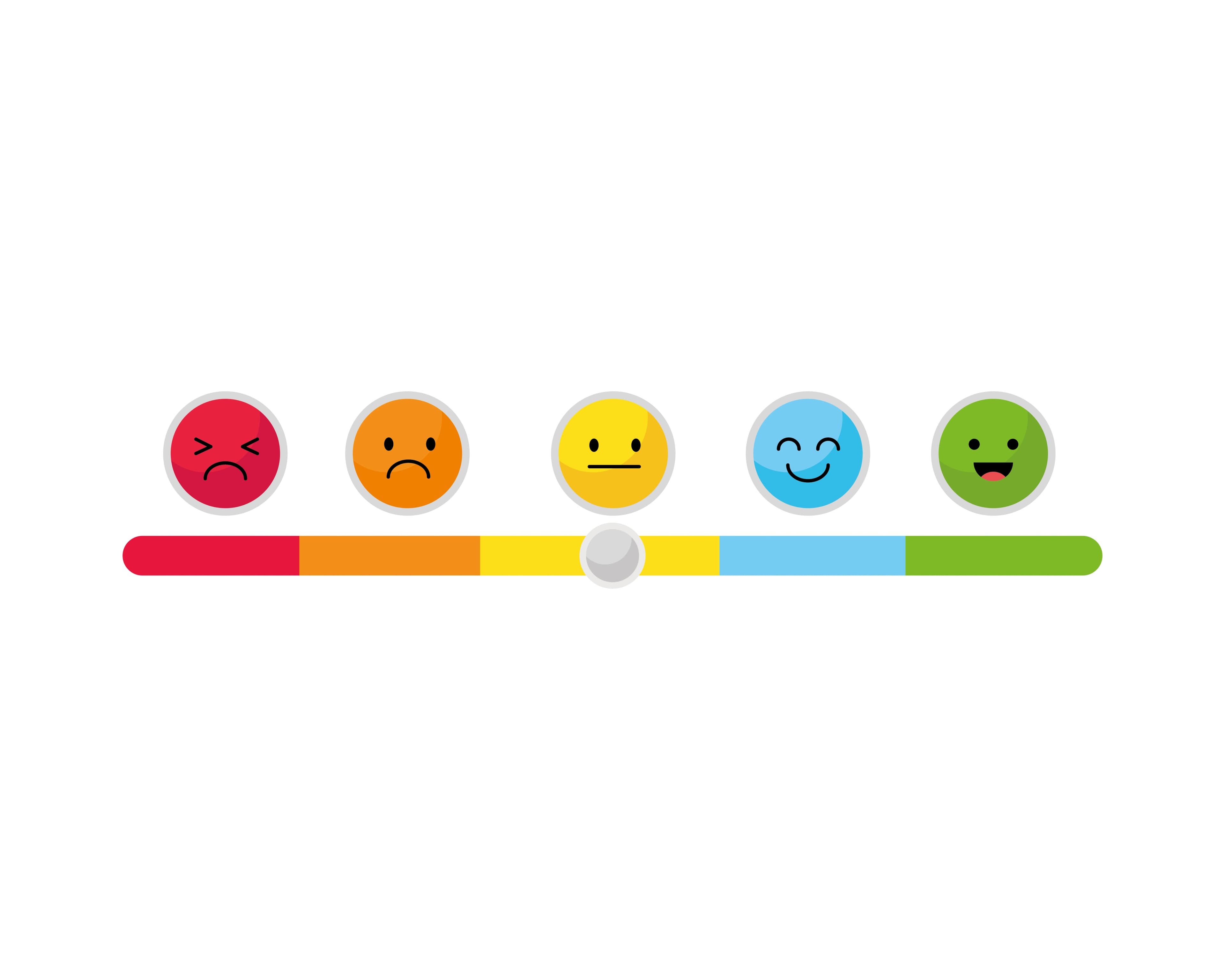
A brand's Net Promoter Score (NPS) is a customer service benchmark (metric) that indicates how likely your customers or clients are to recommend it to others. Companies use NPS to measure customer experience and satisfaction.
A high score means that your brand is doing a good job of meeting customer needs and delivering on its promises.
A low score can indicate that your brand is falling short in some areas. Fortunately, there are a few things you can do to improve your NPS.
A brand's NPS can be improved by improving product and service quality, providing excellent customer service, and building a strong brand identity.
By taking steps to improve your brand's NPS, you can create more loyal customers and increase your chances of success in the marketplace.
Take Your Customer Satisfaction to the Next Level: NPS Best Practices
Now, it's time to understand the impact of NPS on companies. Listed below are NPS best practices to adopt in 2024:
- Use the relevant NPS software
It's always recommended to use NPS software that is relevant to your business. Reasonable and appropriate software can ease data collection.
2. Frequency
Stop sending surveys immediately if someone becomes your customer. Don't forget to follow the following regarding frequency:
- NPS provides you with a complete measure of customer emotion for your brand.
Your goal is to improve the NPS score, so you have to send NPS surveys periodically.
Why periodically?
Because your customers' emotions change over time, and their experience with your brand changes.
A customer who gave you a score of 2 on the NPS survey might give you a 9 in the future if you address their issues.
Companies should aim to increase their employee headcount.
If an audience is a detractor, your business's responsibility is to identify what's wrong with them at that specific moment, which forces them to give a minimum NPS score.
3. In-app surveys and NPS transactional emails
Once a customer completes a transaction, send them NPS surveys.
NPS surveys can be sent in-app after transactions are completed rather than via email.
In case you aren't getting responses from a customer, don't worry. The next day, you can try sending an NPS survey email.
However, with in-app surveys, you are disturbing the flow of customers. So it has a positive impact.
So, in this circumstance, what are the NPS best practices? As soon as the user completes the transaction, send an in-app survey. If you don't get a response from them, send the email survey the following day.
4. Share the NPS survey with respondents and the entire team
Before revealing your NPS score to the whole team, you need to explain the significance of NPS to your organization.
Your teammates should understand how and why NPS matters and be aware of the significance of benchmarking your score against your competitors'.
So have NPS reviews with your team regularly. Motivate them using NPS scores.
Don't forget to compare your competitor's NPS score with yours and your industry's.
What should be the next step after checking the score?
Once you resolve the complaints raised by your customers during the NPS survey, the next step is to reassure them that you have taken their concerns seriously and addressed their queries.
Why? You are addressing their issues by considering their feedback, and they are giving you their valuable time.
5. Interact with your audiences regularly
It doesn't matter how big your company is; it can make mistakes. The biggest challenge for you is handling such a situation.
Do you offer an apology and guarantee them you will not do it in the future? How you tackle this situation will determine your business's longevity.
Interaction is everything, regardless of the kind of relationship you have with your clients.
The majority of businesses don't have a proper communication strategy, and that makes a huge difference.
Are you an organization that interacts with clients regularly or only when you expect them to complete an NPS survey or if you expect something from them?
The answer is here: You should interact with your clients about how you're addressing their issues using NPS or feedback surveys, but you need a proper strategy for internal interactions.
6. Use your promoters
Your promoters have already started spreading the word about how excellent your service or product is.
The best word-of-mouth marketing generates $6 trillion in annual consumer spending and is predicted to account for 13% of customer sales.
Affiliate programmes can help with that.
7. Personalize your NPS surveys
Personalize your NPS surveys with multiple subject lines (A/B testing) and use the best-performing ones.
8. Minimize response time
If you're responding well to NPS surveys but not seeing any improvement in your NPS score, you might need to react quickly.
For instance, if you're getting emails from your customers, they expect to hear back from you ASAP.
Convert Your Website Visitors into Profitable Customers >>> Read more
What are the three components of NPS? Why They Matter
The Net Promoter Score system is entirely open-source, allowing anyone to use its fundamental blocks to build a good organization.
a) Strong, prolonged leadership commitment
The majority of CEOs talk about boosting user experience. This is how it might appear in various departments:
Customer Support (CS)
The traditional approach: An e-commerce business assesses its CS executives on the number of calls they handle per hour.
The problem? Executives rush through their calls, which annoys audiences and might leave their queries unanswered.
The NPS way: When collecting reviews after a CS call, follow the NPS query by asking audiences at what stage their recent CS experience influenced their review.
Ask them to elaborate further if the support call had a negative or positive impact on their score.
This inspires CS executives to solve queries rather than rush through calls and to identify areas for improvement.
Product development
The traditional approach: A Software-as-a-Service (SaaS) business focuses on retention rates, applying pressure across multiple departments to address the issue.
The problem? A non-customer-focused product team might try to retain clients by hiding the "Cancel" link under a mountain of data.
The cancellation rate was reduced, but dissatisfied customers damaged the business.
The NPS approach motivates product development to thoroughly examine and enhance the user experience, which, in turn, builds pure loyalty.
Sales
The traditional approach: A business software provider rewards sales executives according to their revenue.
The NPS approach: When measuring sales performance, look at the Net Promoter Score system. In the long term, happier consumers mean higher earnings.
b) NPS is a reliable metric to use
If you use the Net Promoter Score as a trustworthy metric, you can:
- Assess where you stand in the market
NPS vs. CSAT: Knowing the Important Differences
The Net Promoter Score (NPS) evaluates customer advocacy and loyalty.
Each survey has a different objective.
CSAT surveys convey total audience satisfaction with a specific feature, product, or even the onboarding process and support team.
Product teams can use CSAT data to identify product-related problems.
The objective of NPS surveys is to discover passionate detractors and advocates and recognize what motivates customer sentiment.
Each survey offers various levels of metrics.
CSAT surveys enable you to inspect experiences or communications at a micro level, whereas NPS offers you macro-level insights.
Can You Combine NPS and CSAT Surveys?
The answer to this question is Yes. CSAT and NPS scores are not interchangeable.
NPS reflects the overall sentiment about your service, product, etc., while CSAT provides actionable insights into specific communications.
Why is CSAT better than NPS?
It solely depends on your objectives. So, NPS surveys concentrate on future buying intent and client loyalty, making them perfect for companies that want to measure customer satisfaction over time.
Whereas CSAT surveys offer detailed insights into client perception, they typically involve questions about specific experiences or features evaluated on the fly.
SaaS companies use CSAT to make instant enhancements to their products, for example, to a freshly implemented feature.
Methodology to Boost Net Promoter Score (NPS)
It is a metric that calculates the percentage of customers who are likely to recommend your brand to other clients.
A high score means a high rate of satisfaction.
Customers are likely to spread positive word-of-mouth about it. Improving your brand's NPS can be a challenge.
There are a few things you can do to increase customer satisfaction and loyalty.
First, make sure you provide a good product or service that also meets customer needs.
Second, focus on delivering exceptional customer service and meeting expectations.
Finally, stay up to date with customer feedback and use it to improve your brand. By following these tips, you can improve your brand's NPS and build long-term customer loyalty.
Convert Your Website Visitors into Profitable Customers >>> Read more
12 Ways to Improve Your Net Promoter Score (NPS)
There are many ways to improve your brand's Net Promoter Score, including:
- Increasing customer satisfaction: Ensure that your products/services match customer expectations. Resolve any issues/problems that may arise.
How to Improve Your Brand's NPS with Customer Service
A high NPS indicates that customers are satisfied with your brand and are likely to continue doing business with you.
Although improving it can be quite an uphill task, maintaining good customer relations is a good start.
By providing responsive and even predictive customer service, you can increase customer satisfaction and, as a result, improve your NPS.
You can also use this data to identify areas where your customer service can be improved. You can ensure that your customers are happy and loyal.
How to Improve the Score By Asking the Right Questions
NPS is a significant metric for measuring customer satisfaction and loyalty. To improve it, your business needs to ask the right questions.
First, identify your brand's promoters, critics, and passives. Promoters are customers who are highly satisfied with your brand and are likely to recommend it to others.
Detractors are buyers who are unhappy with your brand. They are likely to spread negative word-of-mouth. Customers who are neither satisfied nor dissatisfied are considered passive.
Next, you need to recognize your brand's primary customer focus. Primary customer focus refers to the main reasons why buyers buy your product or service.
Third, you need to ask questions about how satisfied buyers are with your service.
This refers to the satisfaction buyers feel with the level of customer service they receive.
Finally, you need to ask how likely buyers are to renew their contracts or recommend your brand to others.
Convert Your Website Visitors into Profitable Customers >>> Read more
How to Improve Net Promoter Score through Social Media
One route to improve your brand's Net Promoter Score is through social media.
By engaging with customers or prospects on networks like Twitter, Facebook, and Instagram, you can build relationships and loyalty.
What's more, social networks can be a great way to get customer feedback and learn about areas where your brand can improve.
By monitoring your NPS (Net Promoter Score) and leveraging social media to improve it, you can build a stronger brand image and a more positive customer experience.
Conclusion
A Net Promoter Score is a crucial metric for understanding how your customers perceive your brand. There are many ways to improve this score when it is down.