A data readiness checklist is a set of checks that shows whether your data can support a specific decision or analysis. It tests the sources, definitions, quality, history, and access behind the numbers before you act on them.
Use one before a platform change, a new measurement program, or a budget decision that depends on reporting nobody has verified. Each check ends in a mark you can defend with evidence.
What Is Data Readiness?
Data readiness is the degree to which data is available, correct, and suitable for a defined use. A working data readiness definition always names that use. The same table can be ready for a monthly revenue report and not ready for a weekly pricing decision.
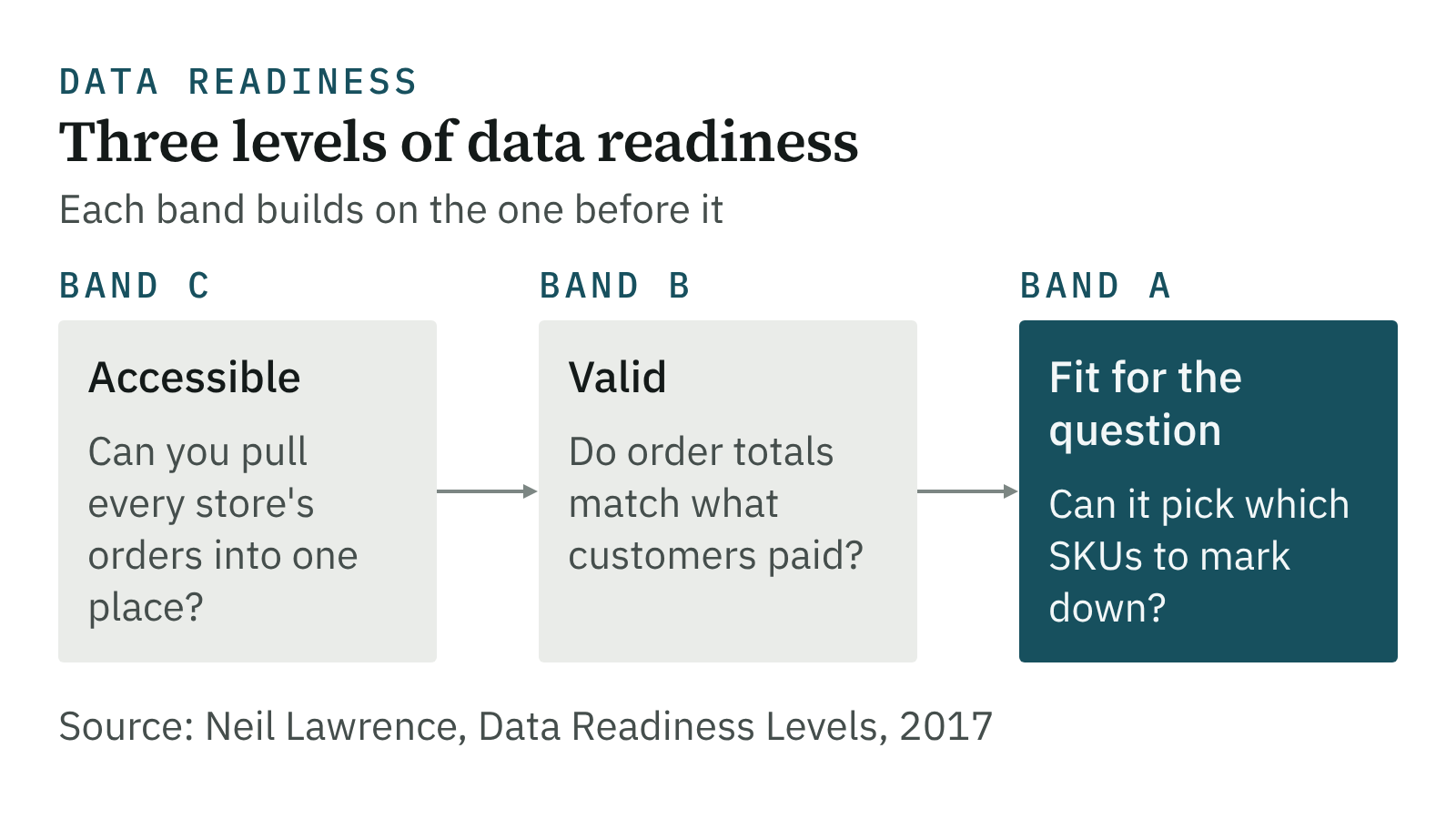
Neil Lawrence, a machine learning researcher, gave the idea a structure in a 2017 paper titled Data Readiness Levels. He proposed three bands, and the checklist below follows that data readiness framework:
- Band C covers accessibility: the data exists, you can reach it, and you are allowed to use it.
Data reaches Band A only when a decision is named. Analysis-ready data and analytics-ready data can still stop at Band B. Clean data that lacks a field the decision needs is not yet decision-ready data.
When to Run a Data Readiness Checklist
Run a data readiness checklist whenever a decision or a new system is about to depend on data that has not been checked for that use. These are the four cases to watch for:
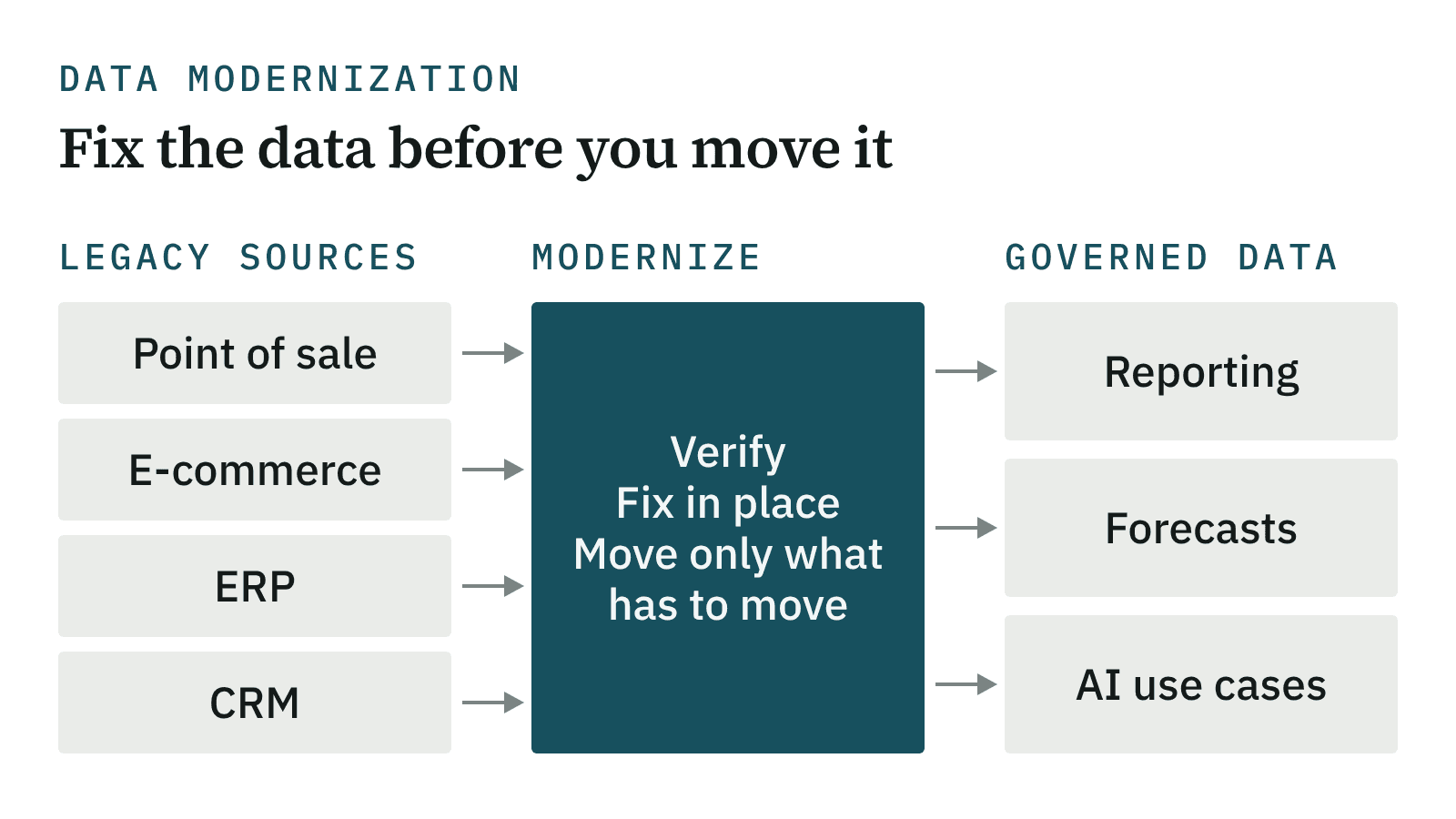
- Before a data migration or a new platform, such as a BI tool, a customer data platform, or FP&A (financial planning and analysis) software. Data migration readiness depends on knowing which fields are reliable before you move them.
AI adds requirements of its own. In a February 2025 release, Gartner, the research and advisory firm, said 63% of organizations "either do not have or are unsure if they have the right data management practices for AI." The release draws on a survey of 1,203 data management leaders run in July 2024.
For marketing teams, our article on AI-ready marketing data covers consolidation, definitions, quality, and governance for customer and campaign data.
The checklist also sizes the work of getting data ready for analysis. Each Gap is a task, and each Watch is a risk to plan around.
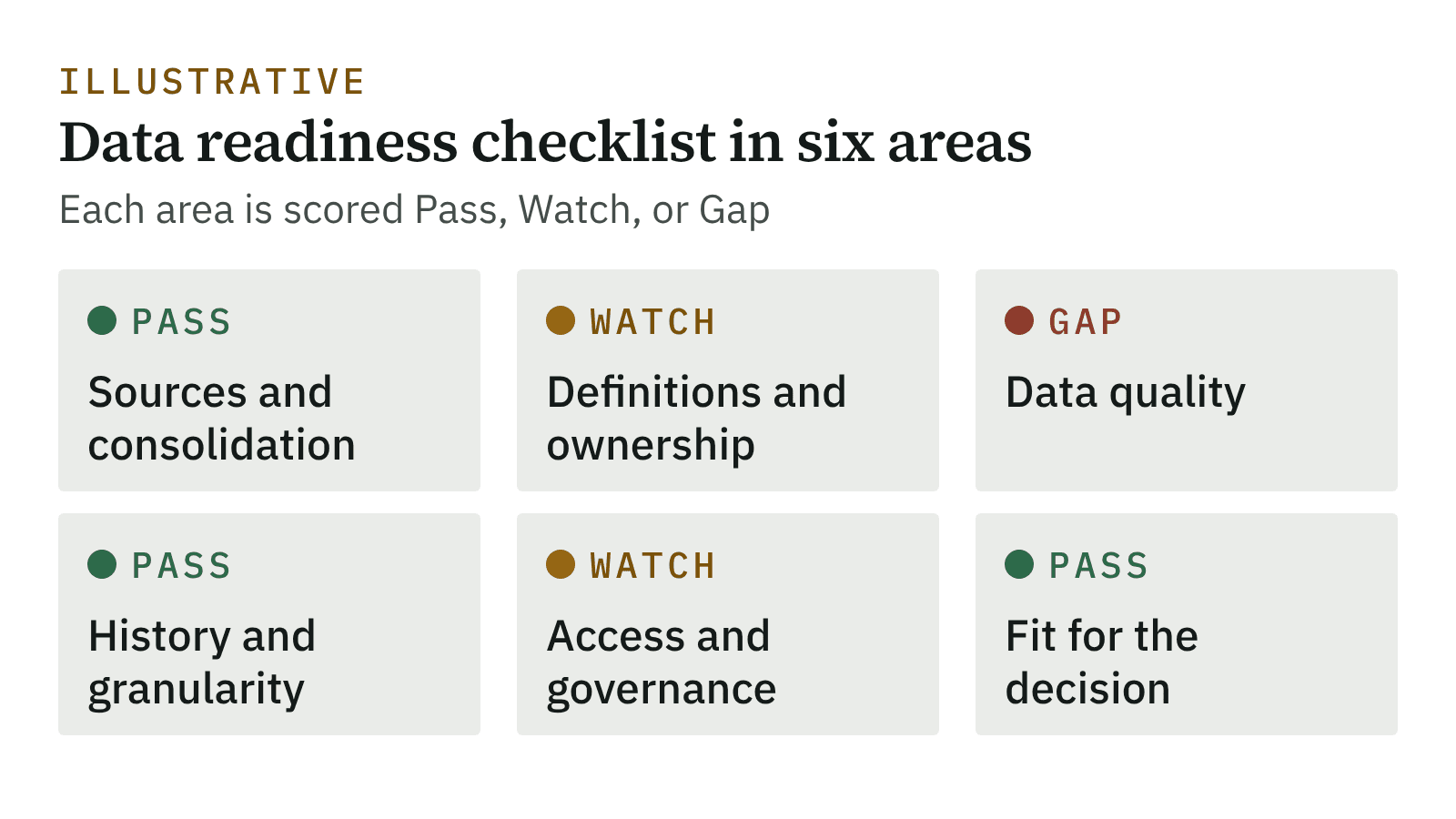
The Data Readiness Checklist: Six Areas to Verify
Work through the checklist against one decision at a time, such as next quarter's paid media budget or a markdown plan. Each area below lists the checks to verify. Every check needs evidence you can open, such as a query result or a document, rather than a verbal assurance.
Sources and Consolidation
When the same metric comes from several systems, two reports can show two different revenue figures. Check that:
- Every source the decision uses, such as your e-commerce platform, point of sale, ad platforms, email, and ERP, loads into one data warehouse or lakehouse on a schedule. A data warehouse is a central database built for reporting and analysis.
If your sources are still scattered, data consolidation comes before every other check. Our data engineering solutions page explains how we approach that work.
Definitions and Ownership
Two teams can calculate margin or customer acquisition cost differently, and both can believe they are right. Check that:
- Every metric the decision uses has one written definition in a data dictionary, a shared document that records what each field and metric means and how it is calculated.
Data Quality Against Agreed Thresholds
This area is the data quality checklist inside the wider check. The UK government's Data Quality Framework, published in 2020, uses six dimensions. Check that:
- Expected records and required fields are present (completeness).
Set a threshold for each field and each decision. Say email addresses are 95% complete. That can be acceptable for a quarterly revenue forecast and not enough for a retention campaign.
History and Granularity
Many analyses need years of history at a fine level of detail, rather than a recent snapshot. Check that:
- History covers the period the method needs. Marketing mix modeling, for example, typically uses several years of weekly spend and sales data.
Access and Governance
These checks make up the data governance checklist. They confirm that the right people can use the data and that nobody can change it without a record. Check that:
- Access controls match roles, so analysts can read what they need and only owners can change source data or definitions.
When governance needs to cover the whole business rather than one decision, our data governance services page sets out how we build it.
Fit for the Decision
The last area is Lawrence's Band A: whether the data answers the question the decision depends on. Data can pass every earlier check and still miss a field the decision needs. Check that:
- The decision and its question are written down, such as "Which 200 SKUs should we mark down in March?"
How to Score Each Check: Pass, Watch, or Gap
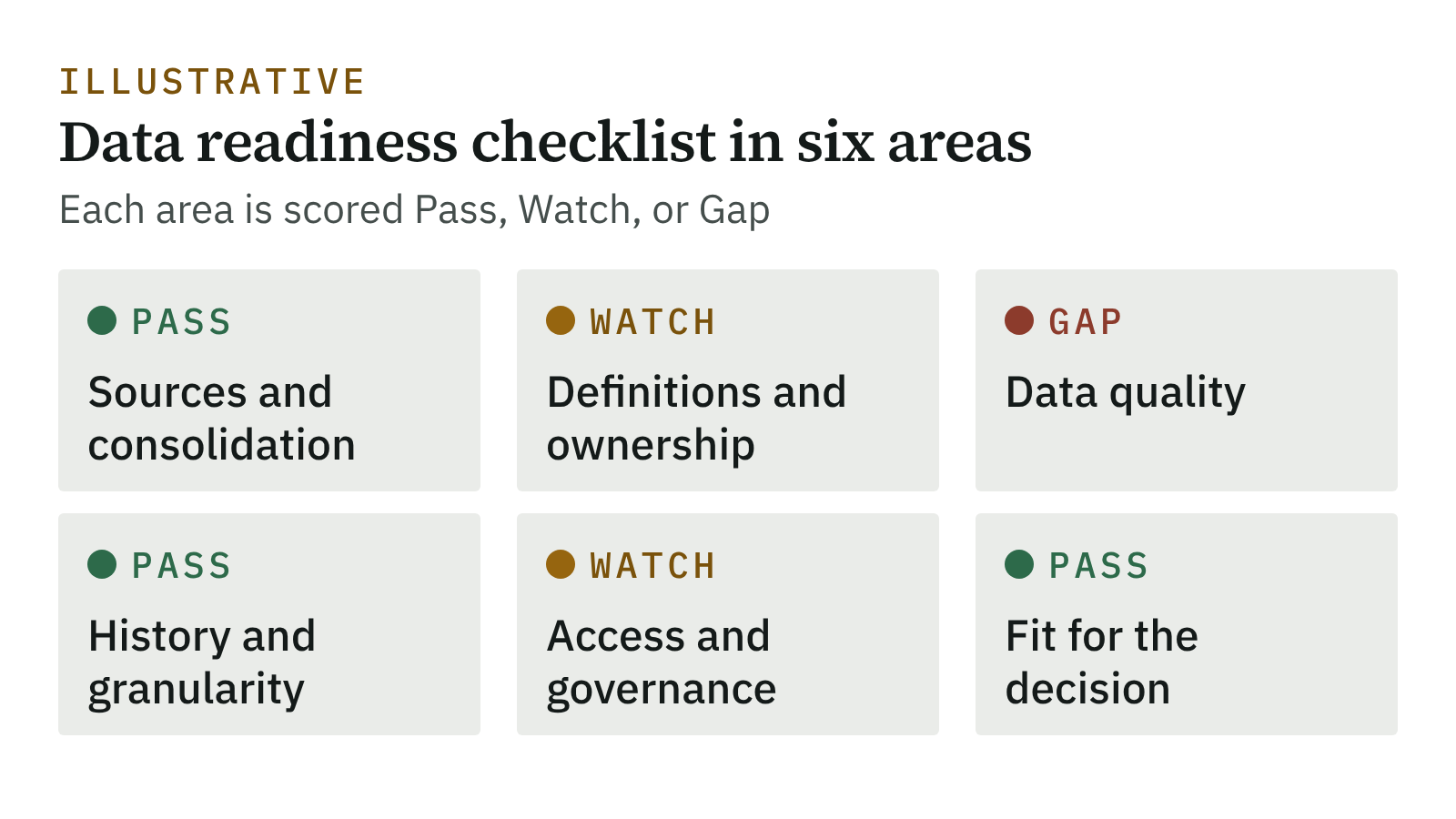
Give every check one of three marks, and record the evidence next to it. A Pass means the check meets its threshold and you can show the evidence. A Watch means it works today but depends on one person or a manual workaround.
A Gap means the check fails, or nobody can show evidence either way. Treat a missing answer as a Gap.
Read the data readiness score for each decision separately. Six passes for the paid media budget and two gaps for the retention program tell you where to work. An average across both decisions would hide the two gaps.
A data readiness check like this shows where one decision stands today. An analytics maturity model describes the stage of the whole organization, which changes more slowly.
How We Verify Data Readiness
Your checklist shows where your data has gaps for one decision. When the gaps run across several decisions, or nobody can produce the evidence, we start with one question: Do you have a data warehouse or lakehouse with your key data sources already consolidated into it?
If the answer is no, partly, or "we think so," the Data Readiness Assessment is where to start. If the answer is yes, the AI Readiness Assessment checks whether that foundation is ready for AI.
The Data Readiness Assessment verifies all five phases of our method, weighted toward Data Foundations and Data Trust. You get a scored gap map, from 0 to 100 for each phase, with the evidence behind every score. You also get a roadmap that sequences what to fix first by business impact.
Final Thought
Run the data readiness checklist against the decision that moves the most revenue or spend, and fix the gaps behind that decision first. Fixes made for one high-value decision typically carry over to the next one.
If you want those gaps verified with evidence and sequenced into a roadmap, get in touch about a Data Readiness Assessment. We start with the platform you already own.