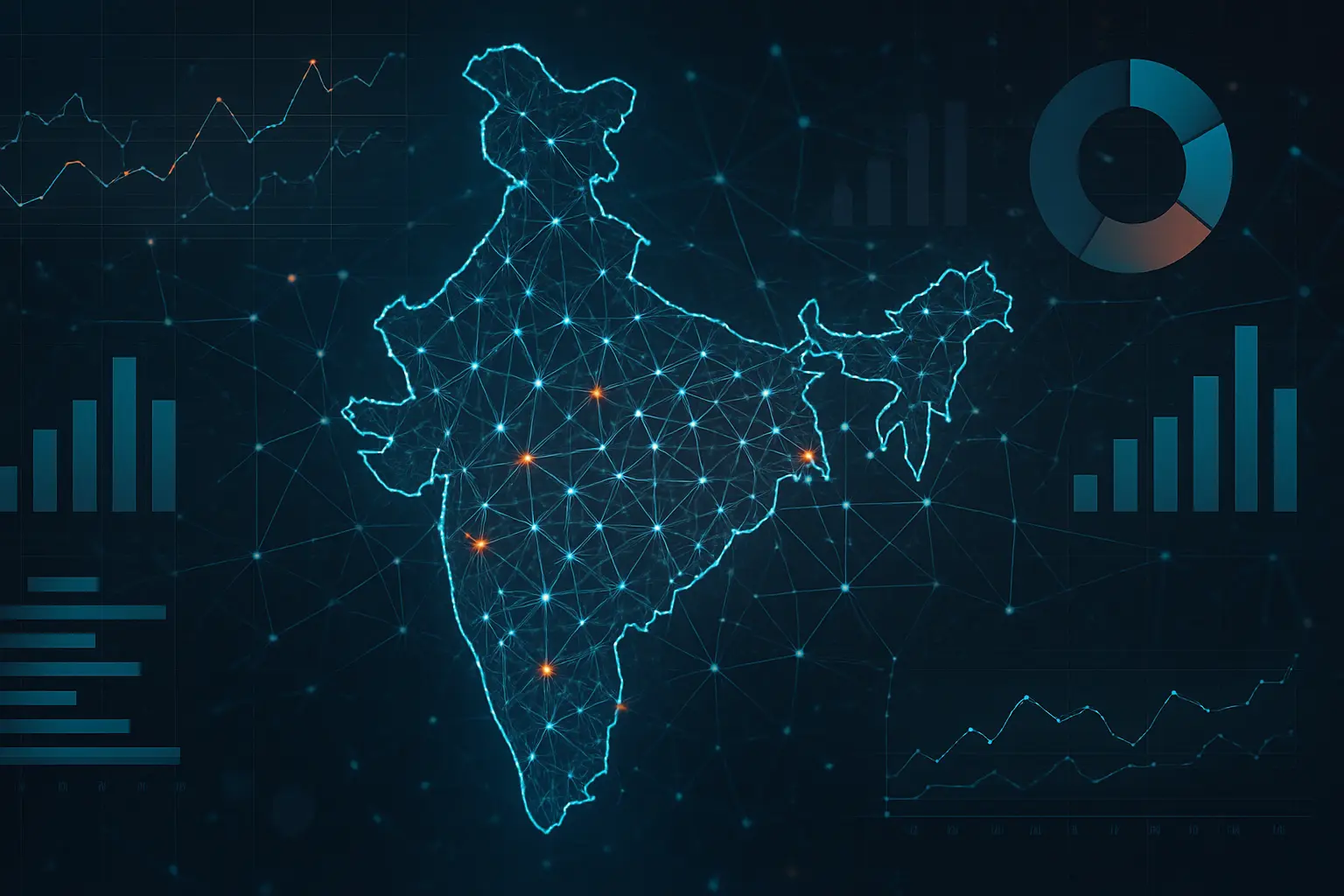
(Our objective through this article is to provide insights through the use of data analytics and social media for informed decision-making.)
Recently, the 16th (Lok Sabha) General elections were held in India. They were conducted in 9 phases nationwide. Even before the elections were announced in mid-March 2014, people in India were very active on social media about the elections and their candidates. These elections have attracted worldwide media attention. Reports say they have been among the most observed elections so far in the largest democratic country in the world, with 814.5 million voters (81.45 crores), including 100 million (10 crores) first-time voters.
Use of Data Analytics and Sentiment analysis by political parties in elections
With national general elections underway, some parties appeared to have an edge, as technology, social media, and big data played a key role in connecting with voters. Data mining of real social media, such as Facebook and Twitter, included voter sentiments, emotions, and concerns across different constituencies and states. India's political parties used this data to prepare a manifesto, develop effective ways to reach voters, drive donations, enroll volunteers, and organize resources on the ground, improving the effectiveness of everything from door knocks and phone calls to micro-messaging and social media.
Today, data is analyzed not just for research but also for real-time monitoring of people's reactions to politics and policies and for rapid responses to crises. Data analytics plays a significant role in changing political outcomes during election time. Studies revealed that in more than 160 out of 543 constituencies, the impact of social media was high enough to determine the results.
"Modi is perhaps one of the most tech-savvy politicians in the world and certainly the most active in India," says Amit Sheth, a professor at Wright State University's Knowledge Computing Center in Ohio.
BJP, the winning party in these elections, had developed its own customized digital tools based on both commissioned and open-source data that put them in direct touch with voters. Narendra Modi, the newly elected Prime Minister of India, had 3.67 million followers on Twitter, 15 million likes on Facebook, and the party's 68 million page views on Google+. Aravind Gupta, Head of the BJP IT cell and social media center, revealed this. A few key metrics determined the candidate's and the party's results in a given constituency. Most of these metrics were derived from social media data analytics and data mining.
I, as part of the IT cell of the BJP Karnataka, would like to describe our game plan for how we operated during the elections. This was carried out at each Assembly constituency level. It was operated at two levels: the general public level and the (Karyakarta) volunteer level.
1) PUBLIC ORIENTED – EDUCATE, MOTIVATE
- Social Media – Facebook, Twitter, Google+ hangout, shared the achievements of Narendra Modi, the failures of the UPA, and the individual achievements of the candidates with the relevant groups.
2. (KARYAKARTA) Volunteer ORIENTED – EDUCATE, EQUIP
- (Karyakartas) Volunteer groups were created for each (Loksabha) general constituency in emails, mobile, WhatsApp, and other social media. Ideally, this is called a Distribution list.
Data Analytics Use By Electronic Media
Electronic media extensively uses data analytics to deliver news during elections. This has helped them understand viewers' concerns, trends among different political parties, and politicians across the country. Based on that, breaking news was telecast many times. These were among the elections in which electronic media have used data analytics more than ever before. In fact, one of the leading channels, CNN-IBN, had partnered with IT giant Microsoft and set up an Analytical Center specifically for these elections. Many IT companies provided data analytics services across various channels during the election period.
In fact, Reuters reported that U.S. social networking company Twitter plans to replicate parts of its India election strategy across countries that go to the polls this year, after it emerged as a key tool for politicians and media companies during the world's largest democratic exercise.
In India, Twitter Inc. worked closely with politicians, including the victor, Narendra Modi, who used the platform for election campaigning, and partnered with mobile and media firms to distribute tweets online and offline.
Now, with polling due in other nations later this year, the San Francisco-based company plans to take its lessons from India abroad to expand its foothold in the political arena and increase its user base.
"The election more than any other moment provides a nice microcosm of the value Twitter can add … we are sharing widely the lessons of this Indian election around the world," said Rishi Jaitly, India market director at Twitter.
Revenue generated by social media and Data analytics companies due to elections has substantially increased, perhaps two or three times what it has been before.
The Pitch Madison Media Advertising Outlook 2014 estimates, released on 19 February, forecast the digital medium to contribute Rs. 3,950 crore (Rs. 39.5 billion or $658.33 million @ exchange rate of 1 USD = INR 60) in 2014. Most of it comes during elections.
"Online as a medium to reach voters has become a potent one for the parties, so spending on digital will only continue to grow," said Asheesh Raina, principal research analyst at Gartner Inc.
The elections are just over, and IT companies have yet to declare their revenue from the polls.
Facts about India and the use of Social Media
- There are 93 million Facebook users and 33 million Twitter users
Some of the data were collected from Social media about key Political parties and politicians.