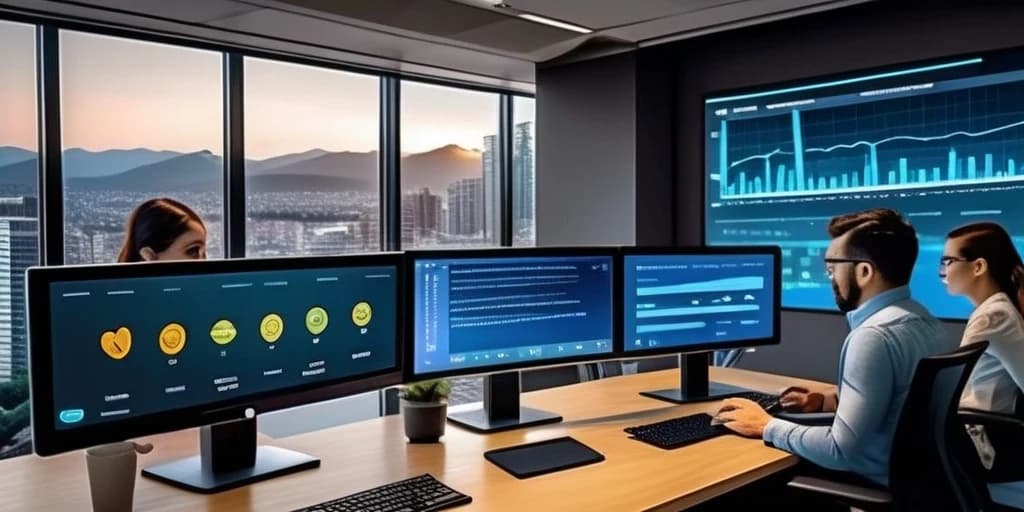

Multi-channel Integration Strategy Whitepaper: Multichannel marketing is the practice of combining direct and indirect communication channels, including online and retail store channels, as well as catalogs, direct mail, and email.
The business needs to be where the customer is. It must use this form of marketing to encourage customers to respond by using the channel of their choice to buy your product or service. Multichannel marketing, in a nutshell, is about the customer's choice.
How Does Implementing a Multi-channel Marketing Integration Strategy Help?
Implementing a successful multichannel marketing integration strategy brings in a lot of benefits:
1. Identify your buyer
It is very important to assemble a portrait of your consumers and what they crave before you launch your promotion. Artificial intelligence (AI) can assist you in doing this by merging and analyzing data from multiple sources to generate a single customer view, and then building successful customer segments based on behavior and interests. With machine learning, you can predict future behavior and the likelihood of conversion, enabling precise targeting.
2. Helps to select your channels
When you identify who your consumers are and what they crave, you can also use Artificial Intelligence (AI) to analyze behavioral data to uncover where they are most active. The insight will help you decide which channels are most effective for achieving them.
For example, if consumers are on the go, social media such as Twitter or Instagram is the best way to reach them. Keep in mind that consumers do not live in a bubble, and that the other channels you use.
3. Build clear and steady messaging
Although your channels may operate independently, it is essential when designing a promotional campaign that the messaging targets the right customer across all channels. The exact wording may vary, as the campaign is built to play to the strengths of each channel, but the pitch, approach, and advertising should be consistent across all channels. Otherwise, there is a chance of confusion in the messaging.
4. Track purchaser rendezvous
It is necessary to monitor how your channels interact with your consumers. Multi-channel marketing can help you track consumer engagement with your campaign and measure results by monitoring site visits, CTA clicks, and email open rates. These insights will help guide campaigns to maximize Return on Investment (ROI).
5. Retargeting
If a consumer leaves your platform without purchasing, you can still reconnect with them through retargeting or remarketing. This involves retargeting ads to your site's visitors after they leave and are on other platforms, such as social media. You can show them ads for the product or service they requested on your site via dynamic retargeting. What they need to do is click to buy, which will assist make conversions.
Key Components of Multi-channel Integration
Customer Data Platform (CDP)
A CDP is essential for creating a unified customer view across all channels. It collects and organizes customer data from various sources, enabling personalized experiences across touchpoints.
Marketing Automation
Automation tools help streamline multi-channel campaigns by:
- Scheduling content across platforms
- Triggering personalized messages based on behavior
- Managing customer journeys across channels
- Measuring performance consistently
Analytics and Attribution
Multi-channel attribution models help understand:
- Which channels contribute to conversions
- Customer journey patterns
- Cross-channel interactions
- ROI by channel and campaign
What is an example of channel integration?
A simple example of channel integration is when a brand connects its online and offline experiences so they feel like one journey.
For instance, a customer browses a product on a retailer's website, adds it to their cart, but doesn't buy. Later, they received a reminder email with the same product. When they visit the physical store, the sales associate can see their online activity and help them find the exact item. The purchase, loyalty points, and support histories are all updated in a single system.
From the customer's point of view, it feels seamless. They don't have to repeat themselves or start over on each channel. From a business perspective, every channel shares data and works together rather than operating in silos.
That's channel integration in practice. It's not about having many channels, but making sure they're connected and consistent.
What is an example of a multichannel?
A straightforward example of multichannel is when a brand shows up in more than one place, but each channel largely operates on its own.
You might see this with a retail brand that sells through its website, sends marketing emails, runs Instagram ads, and also has a physical store.
All of these touchpoints reach the same customer, yet they don’t always talk to each other.
The experience can feel slightly disjointed, even if the brand message looks consistent on the surface.
Customer support is another place where multichannel shows up clearly. A company may offer help through email, phone, live chat, and social media.
On paper, that sounds convenient. In practice, it often means you have to repeat your issue every time you switch channels.
The options are there, but the context doesn’t always carry over. That separation is what makes the setup multichannel.
Customers can pick how they reach out, even though each interaction tends to live in its own silo behind the scenes.
What is multichannel vs omnichannel?
Multichannel and omnichannel both describe how businesses appear across different platforms, but the day-to-day customer experience can feel very different.
With multichannel, a brand appears in several places at once. That might include a website, email campaigns, social media, a mobile app, and a physical store.
Each channel usually runs independently.
You might browse products online, later see an Instagram ad for the same brand, and then call customer support, only to realize none of those touchpoints are connected. Everything exists side by side, but context doesn’t really carry over.
Omnichannel takes a more connected approach, at least in theory. The channels still exist, but they’re meant to work together.
Add something to your cart on a mobile app, and it shows up when you log in on your laptop.
Reach out to support, and the agent already knows what you viewed, bought, or asked about earlier. When it works, the experience feels smoother and a bit more intuitive.
Best Practices for Multi-channel Success
Consistent Brand Experience
- Maintain consistent messaging across all channels
- Use unified brand guidelines and visual elements
- Ensure seamless transitions between channels
- Provide consistent customer service quality
Channel-Specific Optimization
- Adapt content format for each channel's strengths
- Optimize for mobile experiences
- Consider channel-specific user behaviors
- Test and optimize for each platform
Data Integration
- Connect data sources for a unified customer view
- Implement real-time data synchronization
- Ensure data quality and consistency
- Maintain compliance with privacy regulations
Measuring Multi-channel Performance
Key Metrics to Track
- Cross-channel attribution: Understanding which channels contribute to conversions
- Customer lifetime value: Measuring long-term customer value across channels
- Channel engagement rates: Tracking interaction levels on each platform
- Conversion rates by channel: Identifying the most effective channels for different goals
Attribution Models
- First-touch attribution: Credits the first channel a customer interacted with
- Last-touch attribution: Credits the last channel before conversion
- Multi-touch attribution: Distributes credit across all touchpoints in the journey
- Time-decay attribution: Gives more credit to recent interactions
Conclusion
Multi-channel integration strategy is essential for modern businesses looking to meet customers where they are and provide seamless experiences across all touchpoints. By leveraging AI and data analytics, companies can create personalized, consistent experiences that drive engagement and conversions.
The key to success lies in understanding your customers, selecting the right channels, maintaining consistent messaging, and continuously measuring and optimizing performance across all touchpoints.
Download this all-important white papers on multichannel marketing integration strategy.