

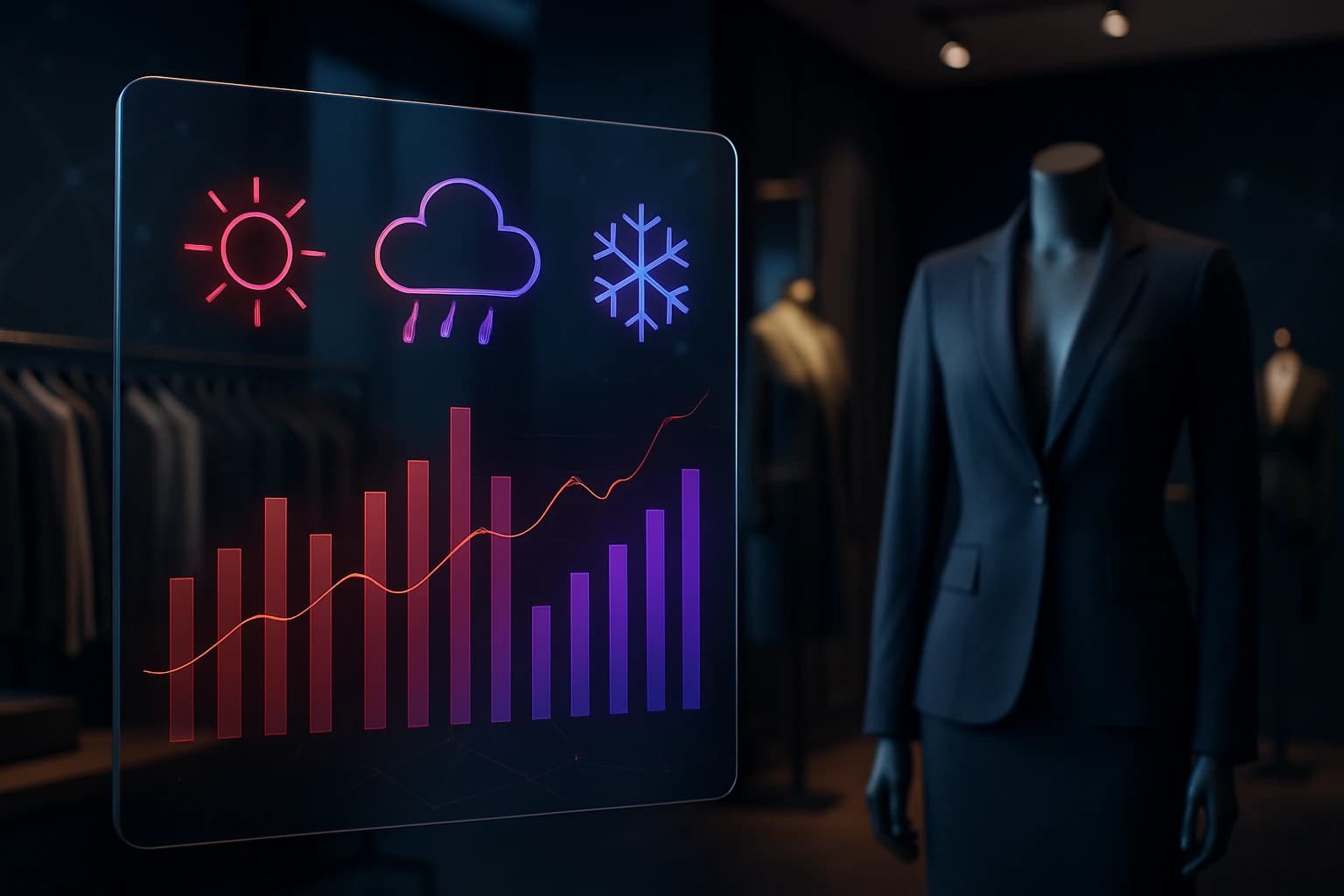
Wondering how the words fashion, weather, and predictive analytics are connected (fashion, weather, and predictive analytics)?
Here’s a poser – what is one of the biggest challenges before the global fashion industry today? Weather. You wouldn’t have guessed it.
Pick up any fashion magazine, read any fashion portal, white paper…. You name it, unpredictable weather is on the Top-5 challenges list before the fashion industry. As the global climate undergoes not-so-subtle changes, largely thanks to global warming, the fashion sector is waging a serious struggle to design clothes that can be worn for about a year, yet is almost clueless about what the weather will be like when their collections hit the shelves.
Here’s a likely scenario – X designer’s summer collection hits a store in New York, only for the summer to turn out rather wet. The clothes remain on the rack, and sales dip.
Here’s where predictive data analytics comes in for the fashion and weather industry. Increasingly, fashion retailers are using predictive data analytics as a twin-edged weapon – to keep up with the latest trends and client demands, and to predict what the weather would be down the line to design “suitable seasonal clothing”.
A report in the Independent last month spoke of some big names hiring climatologists to help predict what the seasons might have in “store”. The Fashion Institute of Technology in New York, for example, has even launched a new course called “Predictive Analytics for Planning and Forecasting: Case Studies with Weatherization.”
Using sales data for analysis is not a new phenomenon in this industry. But with the advent of e-commerce, social media marketing, and mobile devices, newer sources of unstructured data are now available, along with tools to analyze them in near real-time. Then, there’s cognitive computing – the use of artificial intelligence and machine learning – which can give a retailer a week’s lead in predicting fashion trends, thus giving him an edge over the competition.
Make every forecast work for your business. See how predictive analytics connects weather data with fashion trends >>> Learn more
A ft.com report says:
….no styles are shown on US-based online retailer Stitch Fix’s website. Instead, it sends shoppers a box of five items that have been selected according to the “style profile” users have created by answering questions on everything from their favourite colours and fabrics to their size, budget and lifestyle.
The San Francisco-based company employs 75 data scientists who have developed algorithms that aim to ensure that as few items as possible sent to customers will be returned. After receiving their items, customers decide what to buy and what to return, and provide detailed feedback on the selection or what they would like to receive in future. “Those two sets of data — preference data and feedback data — drive everything,” says Eric Colson, Stitch Fix’s chief algorithms officer.
In their joint report released earlier this month, titled ‘State of Fashion 2017’, McKinsey & the Business of Fashion have said the second most important growing consumer segment was the millennial generation. As of spring 2016, millennials were the largest living generation in the United States; over the next decade, their total income of US$1 trillion was expected to grow to be 30% more than that of Generation X and 7.5 times that of the Baby Boomers. On a global scale, 85% of them lived in emerging markets and had a spending power of approximately US $2.5 trillion, expected to grow by a factor of 3 by 2025.
Thus, this customer segmentation required active engagement and a faster response. But, said the report, doing so depends on understanding the underlying attitudes and behaviors that drive millennial consumers to spend on fashion.
This is where data, especially predictive data analytics, will play a significant role, something the fashion and weather industries can’t ignore.
Coming back to weather…..
While fashion and weather share geography – fashion is not generic but region-specific – experts believe retailers can still use historical weather data to predict supply and demand across countries and regions. In the short term, chief merchandising managers, with their teams of analysts, can use a mix of local weather data and customer buying patterns to influence marketing campaigns, thereby removing the weather’s current unpredictability and resulting in more effective sales.