
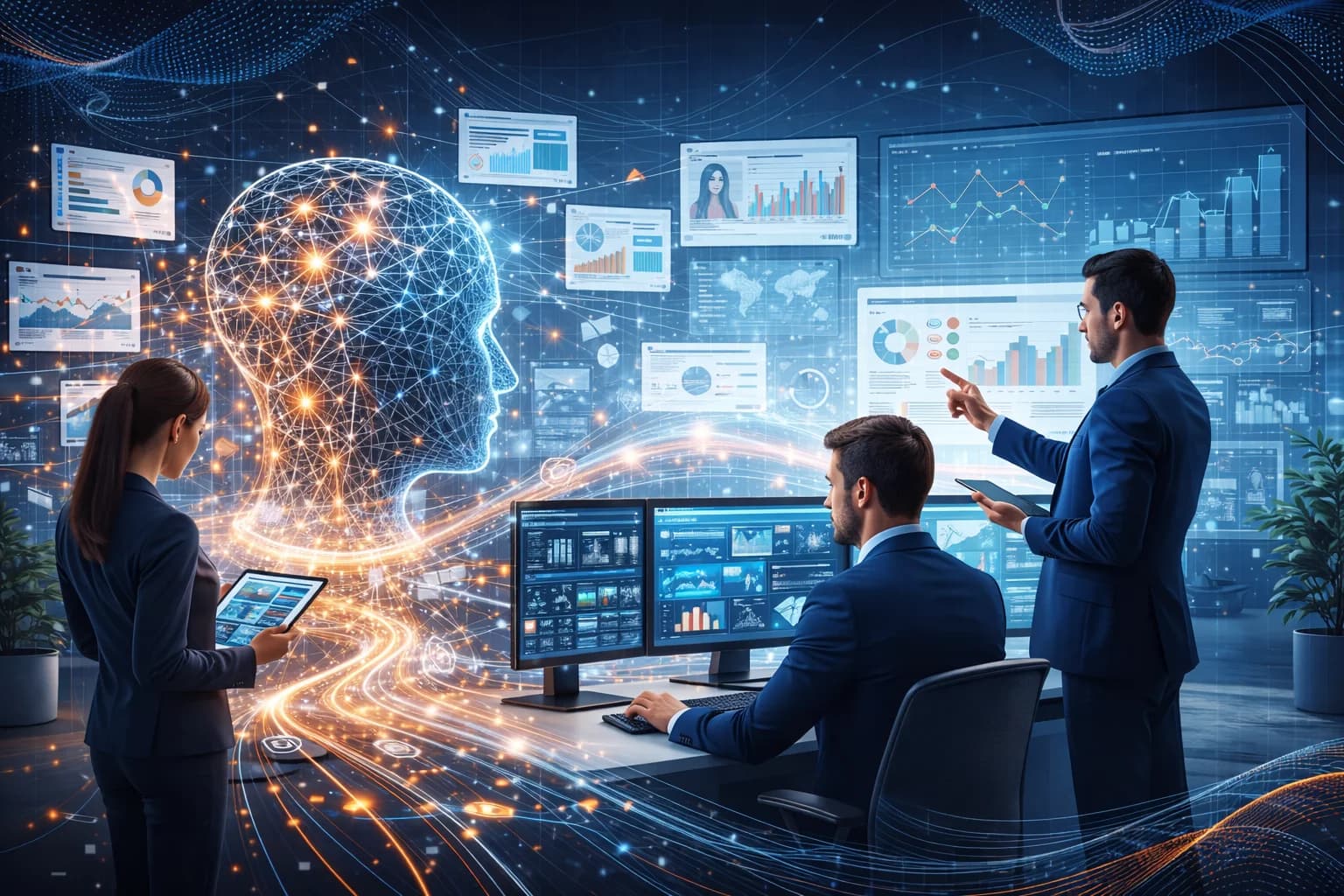
With copious amounts of data coming in daily in retail, it has become clear that, to maximize its analytical value and tackle the complex dynamics of consumer behavior, traditional predictive analytical techniques and tools are coming up short.
But machine learning (ML), a subset of artificial intelligence (AI), is the new savior on the block.
ML models can predict the future and help explain why individual consumers behave the way they do, so progressive retail businesses need to deploy them.
A recent study shows that the global artificial intelligence deployment in the retail market is expected to grow at a CAGR of 34.4 percent from 2020 to reach $19.9 billion by 2027.
Do you want to know when your consumers are most likely to purchase your product or service? Our experts will guide you
Why Predictive Analytics?
Why is predictive analytics important? Data around a customer constantly streams in from point of sale (POS) machines, social media channels, website visits, and so on. Understanding how best to use that information is the task assigned to predictive analytics.
Checking out past trends helps this kind of analytics to determine what will happen next. Armed with the information they need to retain customers and meet their goals, retailers can chart the future.
Having the correct information on hand, retailers can use it to help predict customer behavior. What it allows retailers to do is figure out the next steps in a customer’s journey, helping them shape the buying experience.
How Does Predictive Analytics Help?
To be clear, predictive analytics and ML are two different disciplines and are not dependent on each other. Together, they offer a significant tool to benefit retailers.
Machine learning helps a predictive analytics scientist reduce the time required to collect, clean, and analyze data using various technologies and algorithms.
Ready to understand what your customers will do next? Talk to our data experts to learn how machine learning helps brands forecast demand, preferences, and churn with confidence
ML techniques include Regressions, Classifications, and neural networks. Using these, ML analysts can predict outcomes across retail departments, including customer behavior, digital marketing, financial planning, and inventory control.
Adding ML to Predictive Analytics
Traditional data analytics worked fine for decades in the retail sector. Still, the need for speed, coupled with the requirement to track consumer behavior in near real-time, has exhausted those methods.
The pace of data inflow can be scorching, and traditional analytics can no longer keep up. That’s why the added dimensionality of AI/ML has brought in a new level of data processing.
To Understand Dynamic Consumer Behavior, ML-based Predictive Analytics:
- Uses algorithms such as Decision Trees or Random Forest
Benefits of Predictive Analytics With Machine Learning
Here’s a quick look at some of the key benefits that ML-based predictive analytics brings in:
Price Optimization: Price, after all, is the key in retail. In today’s fiercely competitive e-commerce world, knowing which discount to offer each customer when is key. But that can be tricky.
You may want to win the deal, but you do not want to leave money on the table.
While traditional analytics may not be of much help, an AI algorithm could inform you of the “ideal” discount rate for a product or a commodity for a particular customer.
Writing in The Harvard Business Review about how artificial intelligence is changing sales, AI researcher Victor Antonio wrote, “An AI algorithm could tell you what the ideal discount rate should be for a proposal to ensure that you’re most likely to win the deal by looking at specific features of each past deal that was won or lost.”
Consumer behavior is the dynamic interaction of humans with a brand, product, or service, encompassing cognition, conduct, causes, and effects.
It includes their thoughts, feelings, and actions, which brings in a degree of emotion. Read on to learn how ML-based predictive analytics helps deal with dynamic consumer behavior.
How ML-based Predictive Analytics helps Retailers Understand Dynamic Consumer Behavior and Sell Better
By now, you would have come to appreciate how complex consumer behavior can be, so much so that traditional predictive analytics starts to falter in the process.
Consumer behavior is fluid, like shifting sand on a beach, and making sense of such a changing landscape is not easy for humans unless you bring machine learning to stay ahead of the curve.
Plus, retail marketers have to not only understand customer behavior but also competitive offerings and the reasons customers purchase rival products or services. Monitoring consumer behavior gives the knowledge to understand them, allowing marketing strategies to be better defined.
But do remember that AI will encourage consumers to spend more than ML algorithms can make sense of the copious volumes of data coming in, so investment here is worth it.
Just imagine a tool that helps your customers know when and how the price of a specific product will change? Price prediction is just one of the achievements enabled by ML-based predictive analytics.
Here are Some Other Aspects:
Retailers who use ML-based predictive analysis guide consumers through a much smarter funnel, allowing them to buy before distraction hits or buying fatigue sets in.
It also helps understand what the “right” price is for an individual buyer, yet believing that he/she is getting value for money.
Helps forecast the exact period when a customer is most likely to convert.
An increase in customer loyalty is another benefit of ML-based predictive analytics. Because of dwindling attention spans, marketers must time the moment to capture a customer’s attention with the right product.
Ready to understand what your customers will do next? Talk to our data experts to learn how machine learning helps brands forecast demand, preferences, and churn with confidence
One example is reminding a particular customer of the need for a product again, and or sending promotional emails at optimal times that convert into sales.
Increasing a marketing campaign's efficacy is what can be achieved with AI. When retail marketers can recognize customers’ purchase behavior, they can use the data to inform marketing strategy development. It helps develop a personalized relationship with customers.
Bettering customer experience is another perk. Happy customers are loyal customers, so using AI to automate simple customer interactions with the brand can go a long way toward keeping them satisfied.
Conclusion
Consumers can be fickle. Or can be wooed by the competition simply by better pricing. To address dynamic customer behavior and customize products or personalize customer interactions to retain them, predictive analytics is a favorable option.
But traditional models fail, so machine learning models are the answer. It not only helps keep a close watch on customers at every stage of their buying process, but also personalizes the entire experience, eventually offering them better service and earning their loyalty.